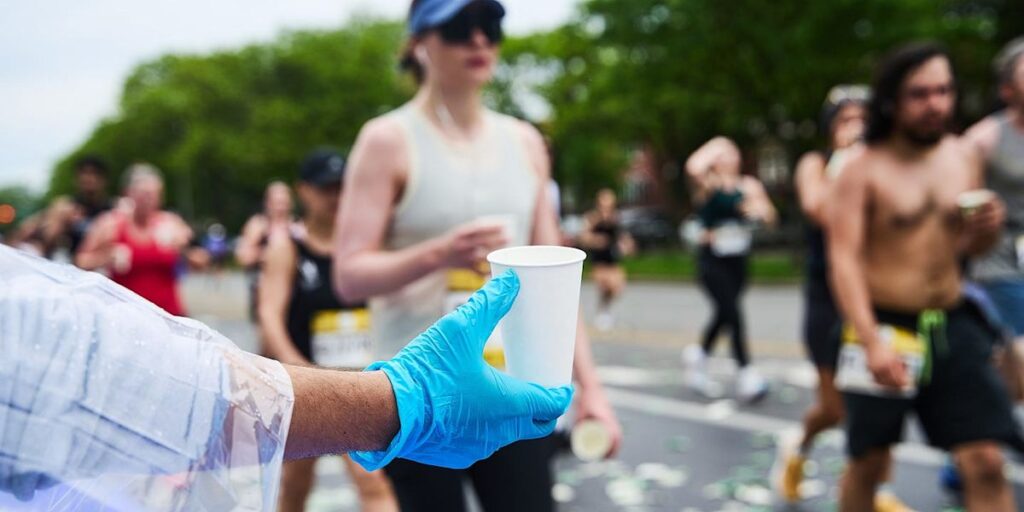
Why Hydration Matters in a Marathon
Picture this: you’re cruising along in your marathon, the crowd is roaring, and then it hits you — a sudden wave of fatigue. More often than not, it’s not your training that’s to blame but your hydration strategy. Keeping your body fuelled properly is vital to running your best race.
Understanding Your Hydration Needs
Before we dive into what to drink, let’s consider your individual needs. Every runner is unique, and hydration isn’t one-size-fits-all.
- Distance: Longer races require more careful planning.
- Weather: Hotter days mean more sweat; cold days might trick you into thinking you need less.
- Your Body: Factors like weight, sweat rate, and fitness level play a significant role.
What Should You Drink?
According to leading dieticians, here’s a breakdown of what to sip during your training and the big day itself:
Water: The Essential
Simple, yet vital. Water remains the cornerstone of hydration. Aim to drink water throughout your training, especially on long runs. A general guideline is to consume about 500-750ml per hour while running.
Electrolyte Solutions
For those longer runs (over 90 minutes), plain water won’t cut it. Electrolytes help replace sodium and potassium lost through sweat. Look for drinks that contain:
- Sodium
- Potassium
- Calcium
- Magnesium
Brands like High5 or Lucozade offer great options for a quick pick-me-up.
Sports Drinks: When to Use Them
Sports drinks are often packed with carbohydrates, making them suitable for those seeking energy during a marathon. Choose a drink with:
- About 6-8% carbohydrate content
- A blend of electrolytes
While they’re fantastic during races, try not to rely on them too heavily in training, as they can encourage unnecessary calorie intake.
Sample Hydration Strategy
Here’s a quick, effective hydration plan for race day:
- Two hours before: 500ml of water
- 30 minutes before: 250ml of an electrolyte drink
- During the race: 150-200ml of sports drink every 30 minutes
Listen to Your Body
Remember, while guidelines are handy, your body will often tell you what it needs. Carry a bottle during your training runs. Practise your hydration strategy to see what feels best on race day.
As you prepare, don’t forget to check in with a nutritionist or dietician for personalised advice tailored to your specific needs. Running is as much about strategy as it is about heart!
Keep Hydrated, Keep Running
So, there you have it! Nail your hydration game, and you’re already a step above the rest. What’s your go-to drink when training? Let us know!